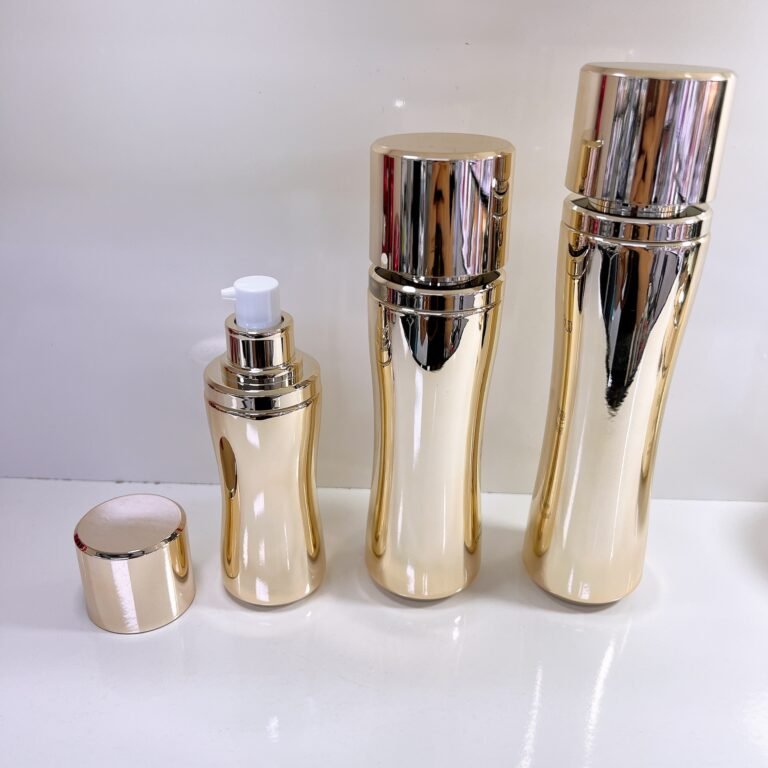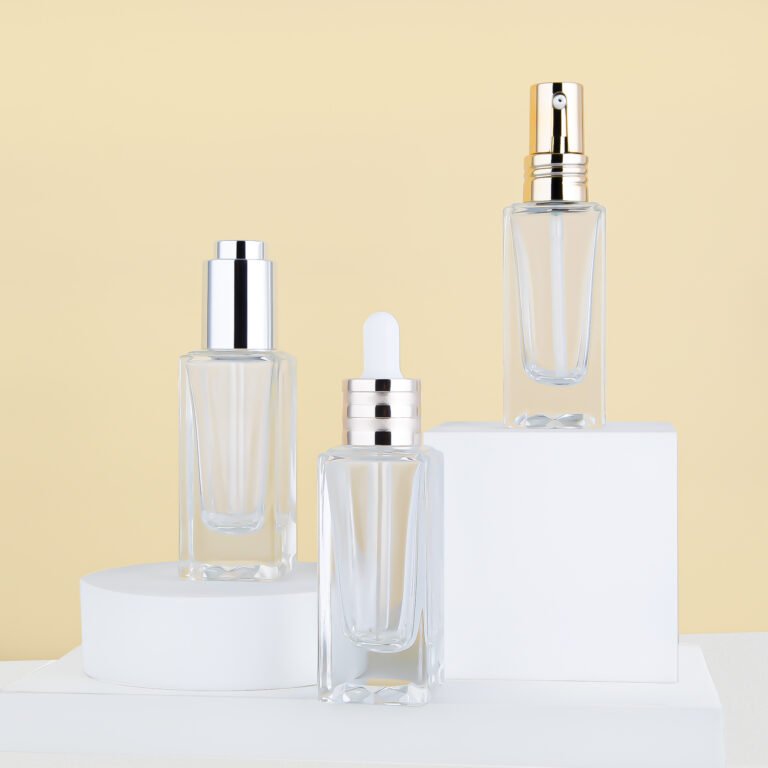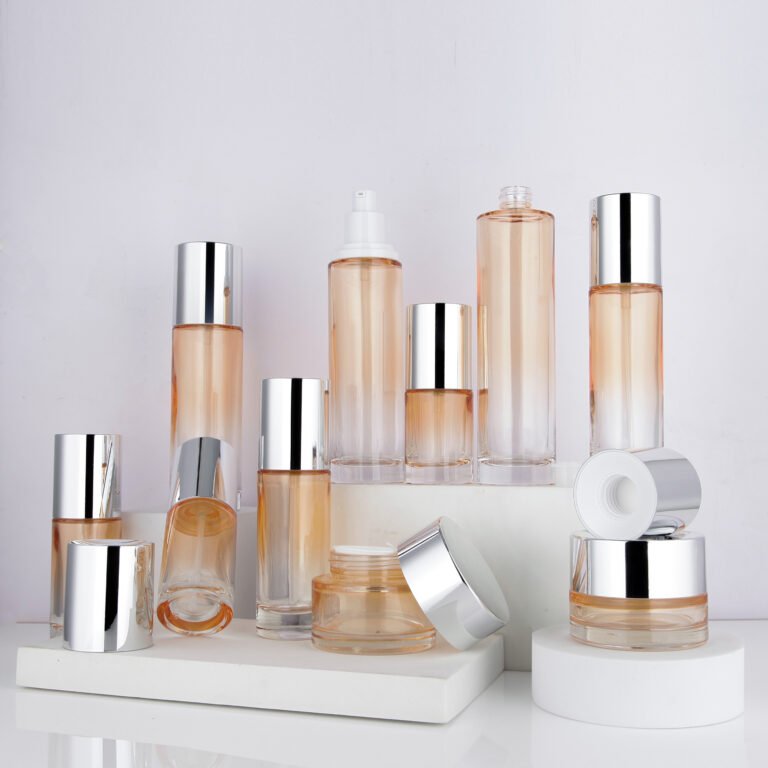
A serum bottle needs to balance precise use with a clear shelf presence. The best size is not just a marketing decision: it affects handling, fill operations, label proportions and how long the product may remain in use after opening.
Choose a size that suits the routine
Estimate how much serum is used per application and how often the customer will apply it. Compare that estimate with the formula's recommended use period and the available fill options. A very small bottle may feel portable but need frequent replacement; a larger bottle may be less convenient to handle.
Consider shape and grip
Tall, narrow bottles can create an elegant silhouette, yet they should stand securely on a bathroom shelf. Rounded shoulders may feel softer, while flat faces provide clearer label panels. Test each shape with the intended cap or dropper, since a heavy closure can change the balance.
Plan the label early
Confirm the printable area on an actual sample. Curves, shoulders and thick bases reduce usable space. Place essential information where it stays legible after filling and decoration. A design that reads well in a flat mockup can become cramped on a small cylindrical surface.
One more check
Request more than one fill volume in the same design family if the launch plan may expand. This reveals whether the bottle stays visually balanced and whether labels and closures can be shared across sizes.
Before ordering at scale, fill sample bottles, photograph them under normal lighting and ask users to open, dispense and close them. Those basic checks improve both design and usability.