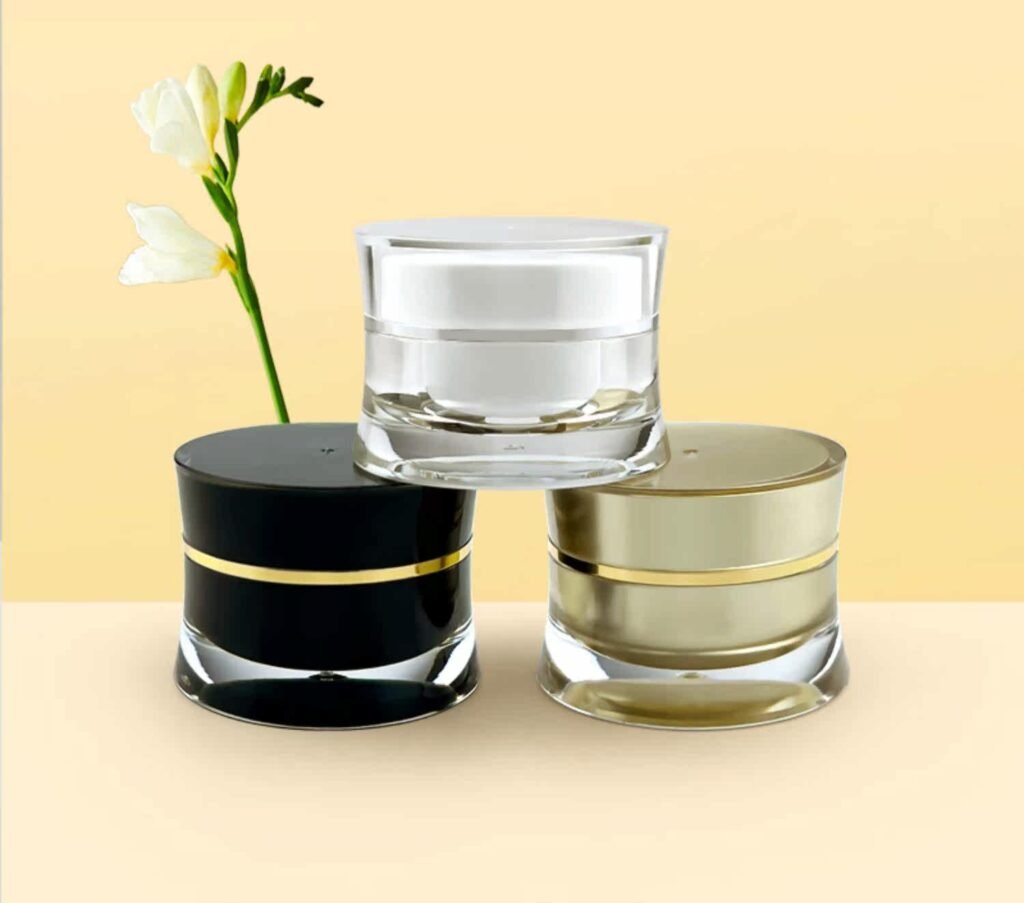
Cream jars are often chosen for their familiar, tactile experience. The details that matter most are easy to overlook: opening force, access to the product, lid alignment, and how the pack looks after weeks of use.
Consider access and hygiene
A wide opening can make a dense cream easy to reach, but direct finger contact may not suit every product positioning or preservation approach. Consider a spatula, inner lid or another dispensing format where appropriate. Any hygiene message should reflect the actual system and its validated performance.
Balance proportions
A low, broad jar may feel stable and display decoration clearly. A taller jar can use less shelf width but may be harder to empty cleanly. Compare filled samples in the hand, on a shelf and in a shipping carton. The apparent capacity of a thick-walled jar can differ from the usable fill volume.
Inspect the closure
Check thread feel, seal placement and whether the cap closes squarely without excessive force. Repeated opening and closing can expose small fit problems. If a decorative outer cap is used, examine its alignment with the inner component and any visible gaps.
One more check
Try opening the sample with dry hands and after applying cream. Note where product collects around the rim and whether the lid can be placed down cleanly. Small moments like these shape the customer's impression.
A successful jar combines the desired visual weight with a comfortable routine. Request a complete assembled sample and evaluate it after repeated use, not only on day one.